logo

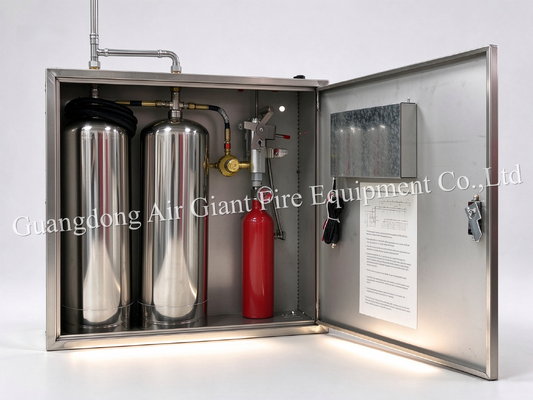
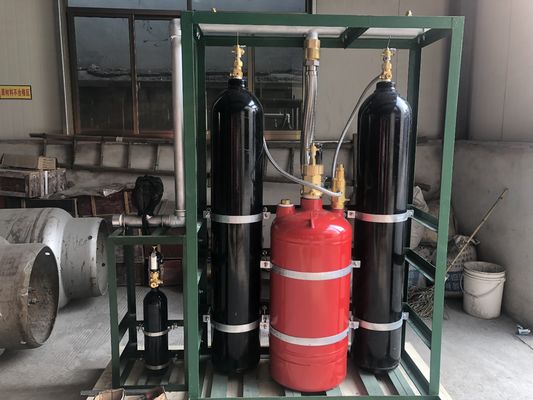
Multiple Startup Methods Kitchen Fire Suppression System with 12L Reagent Capacity and Nitrogen-Driven Commercial Kitchen Fire Suppression System

1 set
MOQ
negotiation
Price
Multiple Startup Methods Kitchen Fire Suppression System with 12L Reagent Capacity and Nitrogen-Driven Commercial Kitchen Fire Suppression System
Features Gallery Product Description Request A Quote
Features
Specifications
Effective Spraying Time: ≥ 30s
Operating Temperature: 0-50 ℃
Fire Extinguishing Agent Name: Edible Oil Specific Fire Extinguishing Agent
Extinguishing Type: Edible Oil Fires
Drive Gas Name:: Nitrogen
Shelf Life Of The Extinguishing Agent: 3 Years
Reagent Filling Capacity: 12L (single Bottle Group)/12L*2 (double Bottle Group)
Temperature Sensor Nominal Operating Temperature: 183 ℃
Filling Pressure Of Driving Bottle: 6Mpa
Maximum Working Pressure Of The Device: 1Mpa
Highlight:

Commercial Kitchen Hood Fire Suppression System

,

Kitchen Fire Suppression System Multiple Startup

,

High-Efficiency Kitchen Hood Suppression System

Basic Infomation
Place of Origin: China
Brand Name: Air Giant
Certification: CAL,CMA,CNAS,ILAC-MRA,CCC
Model Number: CMJS10-1-AG, CMJS18-2-AG
Payment & Shipping Terms
Packaging Details: Plywood outer box with bubble bag or paper
Delivery Time: 10-15 working days
Payment Terms: L/C,D/P,T/T,Western Union,Paypal,Credit card
Supply Ability: 1000 sets per month
Product Description
High-Efficiency Commercial Kitchen Hood Fire Suppression System With Multiple Startup Methods
System Overview

Activation Method:


1. Automatic Activation Method:

1.1 Thermal Detection: When a fire occurs in the kitchen oil pot, the heat generated by the flames will cause the temperature inside the hood to rise. When the temperature reaches the preset thermal threshold of the fire suppression system (usually 183°C to 185°C), the thermal detector will automatically disconnect, triggering the fire suppression system to activate automatically.

1.2 Release of Fire Extinguishing Agent: Once the fire suppression system is activated, it will release fire extinguishing agents (such as dry powder, water-based agents, etc.) through atomizing nozzles, spraying them onto the oil pot and inside the hood. These agents will either chemically react with the burning oil or physically isolate it, forming a covering layer to cut off the air supply and extinguish the flames.

1.3 Cooling Down: After the fire suppression system sprays the extinguishing agent, it typically activates a water flow valve automatically, spraying water onto the oil pot and exhaust hood to cool them down and prevent re-ignition. The cooling water is sprayed for about two minutes before the system automatically shuts off the water.


2. Manual Activation Method

2.1 Fire Detection: In the early stages of a fire or if the automatic activation system fails, on-site personnel can manually activate the fire suppression system.

2.2 Operating the Manual Activation Device: Follow the instructions on the device to remove the safety pin, pull out the ring, or press the button, causing the drive valve to activate and release the fire extinguishing agent from the high-pressure cylinder.

2.3 Observing the Extinguishing Effect: After manually activating the fire suppression system, observe whether the fire source is completely extinguished and take necessary follow-up measures.


3. Mechanical Emergency Activation Method

3.1 Confirming Automatic and Manual Activation Failure: When both automatic and manual activation methods fail to start the device normally, the mechanical emergency activation method can be used.

3.2 Operating the Mechanical Drive Valve: Manually operate the drive valve handle to open the mechanical drive valve, releasing the fire extinguishing agent to extinguish the fire.

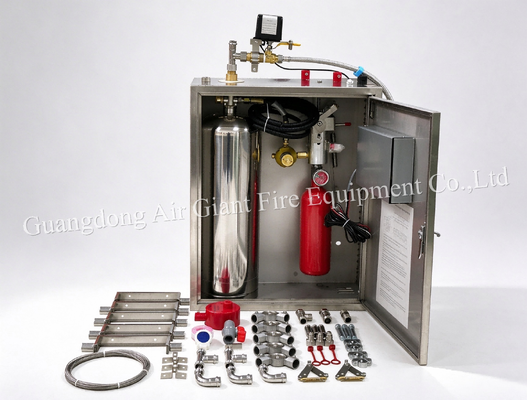
System Components

1

Main Cabinet

2

Agent Storage Cylinder

3

Air Inlet Assembly I

4

Air Inlet Assembly II

5

Bearing Box Wheel

6

Thermal Fusible Metal Cable Release Device

7

Nozzle

8

Manual Switch Button

9

Fuel Valve

10

Driving Cylinder Assembly

11

Spanner

12

Tension Spring

13

Mechanical Actuator Assembly

14

Relief Pump Support Assembly

15

High-Pressure Output Pipe Assembly

16

Check Valve

17

Agent Delivery Pipe

18

Conduit

19

Steel Rope

20

Junction Box

21

Water Inlet Pipe

22

Control Panel


Multiple Startup Methods Kitchen Fire Suppression System with 12L Reagent Capacity and Nitrogen-Driven Commercial Kitchen Fire Suppression System

Working Principle

Multiple Startup Methods Kitchen Fire Suppression System with 12L Reagent Capacity and Nitrogen-Driven Commercial Kitchen Fire Suppression System

System Advantages

-- Rapid Response

-- Automated Operation

-- Effective Cooling and Re-ignition Prevention

-- Environmentally Friendly and Safe

-- Wide Applicability

-- Self-Diagnostic Function

Applications

1. Commercial Catering Establishments: Restaurants and Canteens, Hotels and Guesthouses

2. Public Institutions and Enterprises: Schools and Hospitals, Government and Enterprise Units Food

3. Special Locations: High-Rise Buildings, Special Industries

4. Other Regulated Locations: High-Risk Fire Units, Large commercial complex

Multiple Startup Methods Kitchen Fire Suppression System with 12L Reagent Capacity and Nitrogen-Driven Commercial Kitchen Fire Suppression System
Packaging

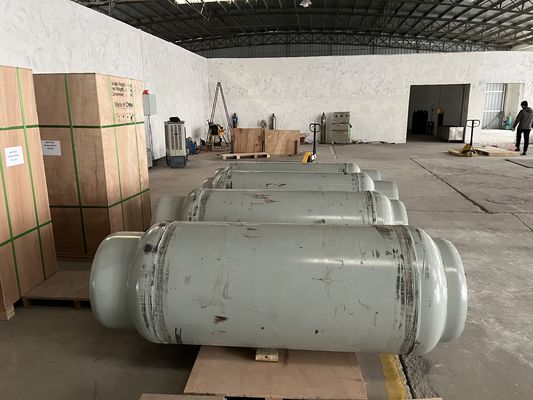
Products are securely packaged with polyfoam and wooden cases. For larger items or upon customer request, pallet packaging is provided. Our standard packaging ensures safe transportation and delivery.

Multiple Startup Methods Kitchen Fire Suppression System with 12L Reagent Capacity and Nitrogen-Driven Commercial Kitchen Fire Suppression System
Recommended Products
Get in touch with us
Contact Person : Mr. Missaya Lu
Tel : +86 188 1945 1181
Characters Remaining(20/3000)